Barista training for a newly opened café: standardise from day one

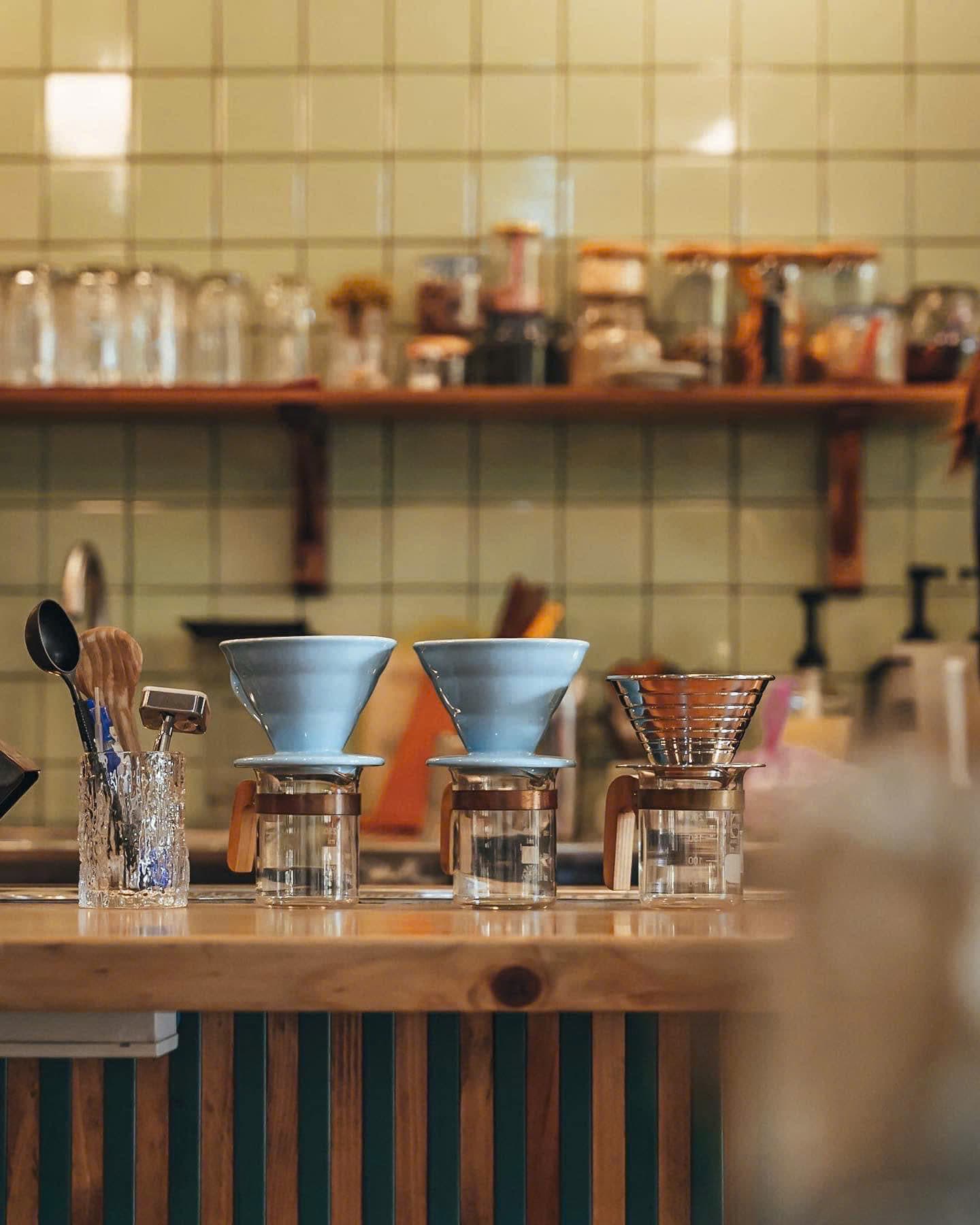
The first coffee of the day is easy to get right, because the person who opened the café is usually the one on the machine. The thirtieth — when the café is busy, when a new staff member comes on shift, when the grinder has warmed up — is the cup the customer uses to decide whether to come back. Barista training for a newly opened café is therefore not about memorising recipes; it is about installing a system solid enough that quality does not depend on who is standing at the counter.

Barista training for a newly opened café should be built on three real things
Many training sessions fail because they are taught on the training centre’s equipment, with the training centre’s beans, following the training centre’s menu. By the time the trainee gets back to the café, everything is off. A training session that works has to be built on three real things that belong to your café:
- The equipment sitting on the counter. Two machines of the same model still differ in pressure, temperature and stability; every grinder gives a different grind setting. Trainees must be dialled in on the exact grinder they will use every day, must write down the starting reference point, and must adjust it themselves when the beans change.
- The menu you will sell, not a sample menu. If Vietnamese iced coffee and milk-heavy iced coffee are your main sellers, spend most of the time on the espresso base, the milk ratio and the ice — not on latte art. A café where customers sit for a long time, by contrast, needs a silky milk texture and a stable surface so the quality is visible.
- The real service pace. Three drinks at once is completely different from one sample drink. Trainees need to practise building drinks in order of priority, timing extractions in parallel, and knowing which cup has to be remade instead of being pushed out to the counter.
The end of the training should be a sheet you can stick at the counter: the recipe for each drink, grind setting, extraction time, temperature, and the name of the person responsible for checking during the shift. Without that sheet, the knowledge stays with the trainee and disappears when they leave.
A four-session practical programme before opening day
Break it down so each session has a testable output, instead of cramming everything into one long day.
- Session 1 — foundation and taste. Taste different roast levels, learn to recognise sourness, bitterness and aftertaste; practise weighing and recording. Output: the trainee can describe in the café’s own language why a cup is sour or bitter.
- Session 2 — espresso and the grinder. Dosing, tamping, timing the extraction, and above all the exercise of adjusting the grind setting when a bag of beans is first opened. Output: two different people pull two base shots with the same extraction time and the same strength.
- Session 3 — milk and the whole menu. Steam milk to the texture suited to each drink, then make every item on the menu in turn according to the agreed recipe. Output: a recipe sheet signed by the person who made it and the person who checked it.
- Session 4 — peak-hour simulation. Simulate a rush of orders, with a wrong order, a customer changing their drink, and a machine needing cleaning mid-shift. Output: the café runs for 30 continuous minutes without anyone having to ask the owner again.
If you do not yet have stable staff and are considering buying beans with technical support included, EPIC’s wholesale partnership is designed for exactly this situation: settle the beans first, then fine-tune the brewing method to match your café’s equipment.
Standardising after opening: the things that have to be written down
Training is only the starting point. Consistent quality comes from things repeated every day that do not depend on memory:
- Recipe cards at the brewing station — grams in, grams out, time, temperature, ice size, milk quantity. Anyone coming on shift can read them without asking.
- A grinder adjustment log — date, bean type, grind setting, extraction time, who adjusted it. After a few weeks you will see the patterns: fresh beans need a different setting from beans that have rested, mornings differ from afternoons.
- A cleaning schedule for the grinder and espresso machine — record the time and the person. Uneven cleaning is a very common reason the taste changes and nobody understands why.
- A five-minute taste test at the start of each shift — the person opening the shift pulls a base shot, tastes it, compares it with the reference description, then decides whether the machine needs adjusting.
- One person responsible for quality each shift — not the best barista, but the person with the authority to require a drink to be remade.
Three mistakes that keep training from reaching the operation
- Teach once and stop. Hand skills fade after a few weeks without repetition. A 30-minute refresher each month, focused on your best-selling drink, is usually more effective than a long course at the start of the year.
- Training the barista but not the checker. A café needs a standard for rejecting a cup, and a person willing to say this cup is not good enough. With only baristas, quality drifts from shift to shift.
- Changing beans in the middle of training. Every bean change means re-adjusting the grind setting and possibly changing the brew ratio too. Settle on beans for at least one menu cycle before training in depth.
Market view
According to Thanhnienviet on 2026-09-28, the training provider Barista Zone said around 95% of its instruction time is devoted to practice, and offered a notable observation: a delicious recipe is not necessarily a good recipe for business, because you still have to deal with cost of goods, dosing, speed of execution, the ability to train staff and the supply of ingredients. This matches operational reality: training content should be designed around the café’s menu, not around a set of sample recipes.
According to The Knowledge Academy on 2026-10-29, the Basic Barista Course in Saigon is described as a one-day course covering the practical work of dialling in the grinder, setting up the espresso machine, dosing – tamping – timing the extraction, steaming milk, cleaning and service procedure; the provider also runs on-site training for businesses. The fact that a short course already has to pack in cleaning and workflow shows the market is judging baristas on their ability to keep the counter moving, not only on their latte art technique.
Frequently asked questions
Should a newly opened café train baristas before or after opening?
Before, but close to opening day. Train too early and hand skills have gone cold by the time you open; train after opening and the first days have already shaped customers’ impressions. The tidiest approach is to settle the menu and settle the beans first, train in the one to two weeks before opening day, then use the final session to simulate peak hours on the real counter.
How long does barista training for a newly opened café take to be enough?
Enough for a basic coffee menu is usually a few practical sessions with clear outputs, plus one refresher session after opening. What decides it is not the number of sessions but whether each session can be checked: two different people make the same drink with the same result, and a new person can follow the recipe card. If the session ends without a recipe card and a grinder log, treat it as unfinished.
Do you need to retrain when you change beans or add a new drink?
Yes, but one short session is enough. A bean change brings a change in grind setting, sometimes in brew ratio too; a new drink brings a change in the order of steps and in service time. Keep the same frame: taste the reference sample, adjust the machine, write it in the log, update the recipe card, then have the whole shift do a practice run before selling to customers.
Coffee to try at EPIC
Choosing beans for a new café should start with two questions: what is your best-selling drink, and does the barista have the skill to handle a high-acidity bean. The two below suit two different menu directions.
Peru — Cajamarca Jaen suits a menu leaning towards fruit aroma and bright acidity with a long sweet aftertaste — easy to use for both the espresso base and pour over to introduce the bean to customers. If the café has a bar where customers sit and watch, this is a bean that creates a moment worth talking about.
Robusta Honey suits drinks with milk and ice — Vietnamese iced coffee, milk-heavy iced coffee, cold brew — thanks to its strength and solid aftertaste, which keeps the milk from taking over the cup. It is also the easier choice to keep stable when the café is busy and the barista does not yet have much experience.
Why EPIC
- EPIC has roasted coffee in Saigon since 2014 on a drum roaster, adjusting the profile of every batch, for both its own retail line and for partners — which means the beans used in your café can be adjusted to the way you brew.
- Green coffee arrives by the bag, is hand-sorted before roasting, rested after roasting and only then packed to order; so when you need to change beans for a new menu season, consistency between orders is easier to control.
- EPIC coffee has been exported to Russia and the Netherlands, so the packaging specification and batch notes are clear enough to cross-check when a lot needs to be traced.
- You can taste before you commit: the roasting workshop at 54/8 Ao Đôi, Bình Hưng Hòa, TP.HCM, and the café at 49 Ngô Thời Nhiệm, Phường Võ Thị Sáu, District 3 — tasting it the way your café will brew it is the quickest check.
- The EPIC team supports partners through the wholesale programme, from choosing beans to suit the menu to adjusting when the café’s equipment or staff change.
If you want to start with one bean that works for both the espresso base and pour over on your opening menu, order Peru — Cajamarca Jaen before your trial day so you have time to adjust the machine to the exact batch you receive.
Continue reading the journey
The next article goes deeper into pre-opening preparation — from settling the menu and ordering equipment to the staff training schedule — so you can compare it with your own café’s progress.
Barista training for a newly opened café: what to prepare before opening day

We roast in-house at our own drum roastery in Sài Gòn — sourcing single-origin lots from a real, catalogued network and dialling profiles cup by cup for our own bar and for partners across Việt Nam.
@epiccoffeeroaster · Follow on InstagramSpecializing in